The World of Health & Medicine News

New robot helps old people with frailty to walk without fear of falls

New robot helps old people with frailty to walk without fear of falls

Getting on in years means not being as light on one’s feet as in the past, but also, for some, the risk of debilitating falls, which can be even more dangerous for those who live alone.

With all that in mind, Massachusetts Institute of Technology (MIT) engineers have made a robot to help elderly people remain at home for longer and avoid having to either pay for care or depend on family for assistance with standing and sitting.

“All the demographic trends point to a shortage of caregivers, a surplus of elderly persons and a strong desire for elderly persons to age in place,” said MIT’s Roberto Bolli.

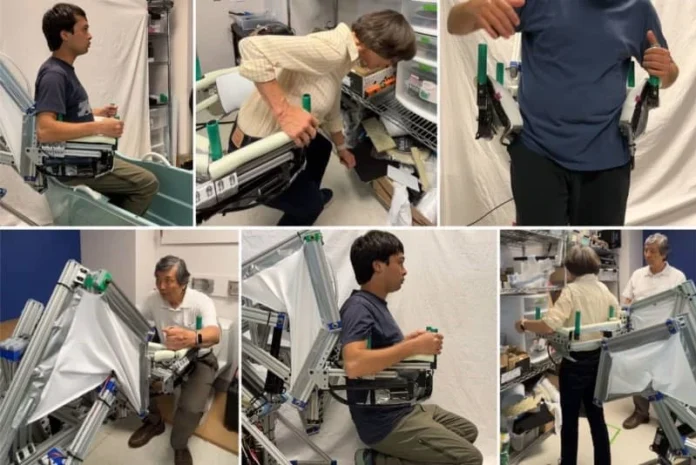
The MIT team said they have built and tested what they call e-bar, the Elderly Bodily Assistance Robot, which the university described as “designed to physically support the elderly and prevent them from falling as they move around their homes.”

“Many older adults underestimate the risk of fall and refuse to use physical aids, which are cumbersome, while others overestimate the risk and may not exercise, leading to declining mobility,” said Harry Asada of MIT.

The contraption entails “robotic handlebars” that follow the user, who, the MIT team said, can in turn “walk independently or lean on the robot’s arms for support.”

“The robot can support the person’s full weight, lifting them from sitting to standing and vice versa along a natural trajectory. And the arms of the robot can catch them by rapidly inflating side airbags if they begin to fall,” the researchers continued.

“Our design concept is to provide older adults having balance impairment with robotic handlebars for stabilizing their body. The handlebars go anywhere and provide support anytime, whenever they need,” Asada explained.

The prototype is operated by remote control, but the team aims to create a smaller, more nimble update that is automated to detect a user’s movement and follow him or her around.


spot_img

Explore more

spot_img

WHO chief still hopes Trump administration will rethink withdrawal

WHO chief still hopes Trump administration will rethink withdrawal The World Health Organization chief said on Thursday that he was still hoping the U.S. administration...

FDA approves first new antibiotics to treat gonorrhea in decades, with...

FDA approves first new antibiotics to treat gonorrhea in decades, with hope to combat drug resistance  The U.S. health regulator on Friday approved Innoviva's oral...

US FDA Approves First At-Home Device for Depression

US FDA Approves First At-Home Device for Depression The U.S. Food and ‌Drug ​Administration has approved Flow Neuroscience's ‌at-home brain stimulation device to treat depression,...

Health Rounds: Regeneron drug wipes out residual multiple myeloma cells in...

Health Rounds: Regeneron drug wipes out residual multiple myeloma cells in small trial A recently approved antibody drug from Regeneron Pharmaceuticals eradicates residual traces of...

FDA approves first gene therapy for rare immune disorder

FDA approves first gene therapy for rare immune disorder The U.S. Food and Drug Administration said on Tuesday it had approved the first gene therapy...

STOPPING GLP-1 DRUGS DURING PREGNANCY CARRIES RISKS

STOPPING GLP-1 DRUGS DURING PREGNANCY CARRIES RISKS Stopping GLP-1 weight-loss drugs before pregnancy appears to increase the risk of complications and preterm delivery, a new...

US FDA approves first drug under new fast-track review program

US FDA approves first drug under new fast-track review program The U.S. Food and Drug Administration approved on Tuesday the ​first drug under its new...

Global leaders commit $1.9 billion to eradicate polio amid funding cuts

Global leaders commit $1.9 billion to eradicate polio amid funding cuts Global leaders pledged $1.9 billion to advance polio eradication on Monday, accelerating efforts to...