Simple patch can make medications safer and more effective
Vancomycin is the antibiotic doctors reach for when almost nothing else will work. It’s used in hospitals for serious drug-resistant infections, or for when an infection is spreading through the patient’s bloodstream, but it’s also notoriously tricky to dose: too little and it won’t knock out the infection, too much and the patient risks kidney damage or even death. Up to 40% of patients receiving vancomycin develop an acute kidney injury.
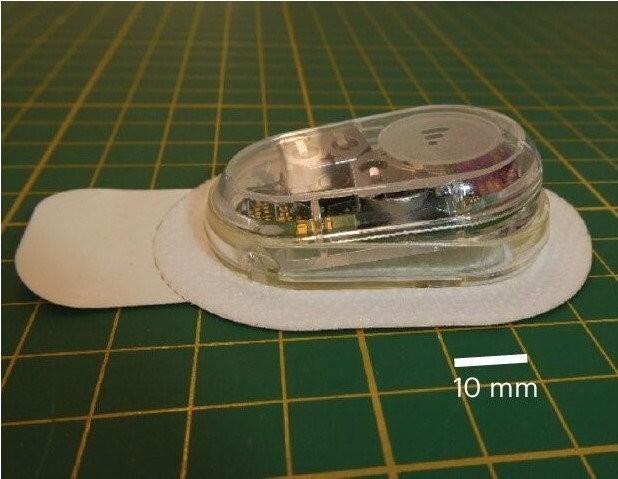
Right now, dosage levels are monitored by repeated blood tests, an invasive and time-consuming process that can’t always give clinicians the data they need in time. Hoping to solve this issue, UNSW and international researchers working alongside Australian diagnostics company Nutromics developed a minimally invasive patch that tracks the antibiotic in patients every five minutes.
The team has published the results of a clinical trial in Nature Biotechnology, and say its success demonstrates that the major scientific and safety challenges have been solved.
“This is such an exciting breakthrough,” says Scientia Professor Justin Gooding from the UNSW School of Chemistry, who helped develop the tool. “It means we can monitor people on the timescales needed so we can make sure they get the best treatment, the most effective treatment, and the safest treatment,” he says.
A ‘lab-on-a-patch’
The device uses synthetic DNA-based sensors to measure dosage levels, building on lab research demonstrating their potential. The sensors, known as “aptamers,” bind to target molecules in the human body and sit on microneedles in the patient’s arm that sample fluid from beneath the skin. Patients reported that this process was nearly painless, making the patches much more comfortable than standard blood draws.
The aptamer technology can be tweaked to test for other drugs and illnesses, and Nutromics is working on other diagnostic and monitoring patches.
“Sepsis is one of the leading causes of preventable death,” says Professor Gooding. “The problem with sepsis is its symptoms are very similar to other infections, so how do we know for sure you’ve got sepsis? If we could measure sepsis markers in the body, then we could treat it very effectively and quickly using antibiotics. It would save a lot of lives. But the concept can keep going on. If you think of any drug, any small molecule, in principle, this technology could be used to monitor for it.”
Out of the lab and into the hospital
Researchers had long believed aptamer technology could be used as a diagnostic tool, with previous studies on laboratory animals demonstrating their potential. Working with Nutromics, however, gave researchers the opportunity to help design a readily manufacturable device that could turn their lab work into real-world impact.
“The reason I’m involved in this is this is really a once in a lifetime opportunity,” says Professor Gooding. “If this company gets to market and this technology proves to be useful, it will change the way we do health care.”
Getting ideas out of academic research labs isn’t always easy, though. Professor Gooding says this is why industry partners are so crucial. “What academics do is come up with the ideas and show that they have potential. If they’ve got commercial potential, other people should take them through to market,” he says. “You need people who know how to translate an idea into a product.”
Nutromics CEO Peter Vranes also stresses the importance of partnerships between academia and industry, noting that a research institution’s true power lies in discovery, not always in translating those discoveries.
“When trying to accomplish a world-first as we have in this study, you need to combine exceptional discovery with translation,” he says. “By collaborating with leading research institutions like UNSW, we do exactly that: successfully create real-world solutions that improve patient care.”
Trials of the patch are underway in ICUs across Australia and Nutromics hopes to get U.S. regulatory approval by next year. The company is also working to adapt the technology to other conditions with the hope that real-time monitoring for cardiology, or even the ability to quickly triage patients in emergency departments, might one day become common.